
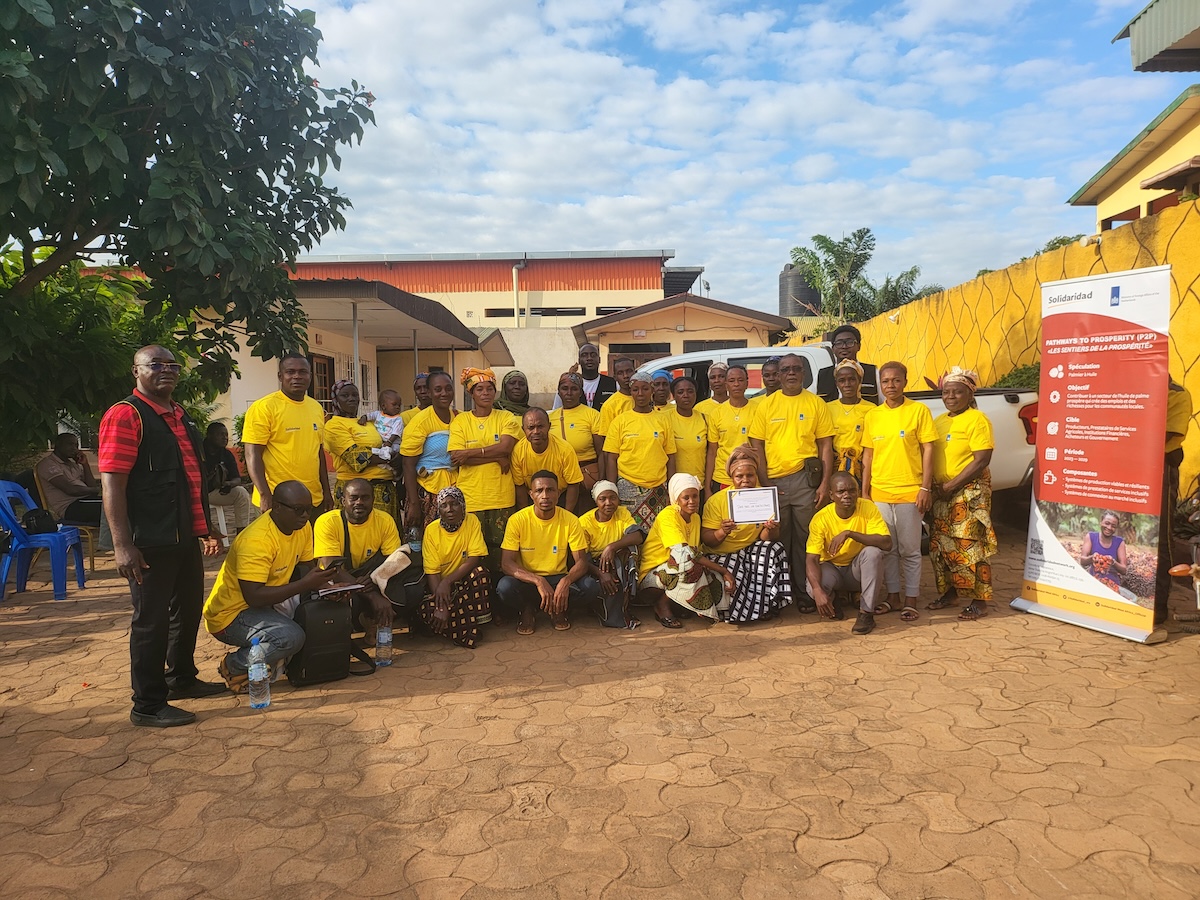
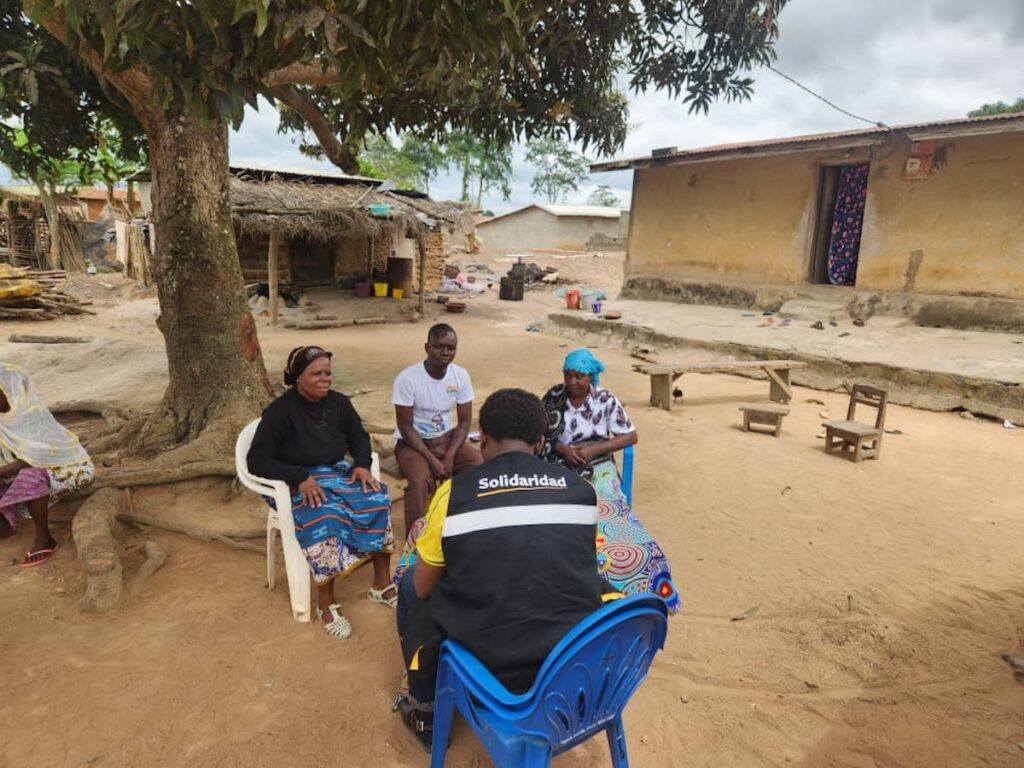
In Béhiri Dies, a community in the South-west region of Côte d’Ivoire, palm oil processing is much more than a job; it’s the lifeline that sustains families. But behind each bottle of palm oil lies hard, often invisible, work. For Louise Koné, a member of the Binkadi cooperative, palm oil processing is her sole source of income. Her daily life revolves around a series of activities to obtain palm oil.
A laborious and physical process
After purchasing fresh fruit bunches, Louise hulls them by hand, carefully sorts and dries the fruits. The process continues with boiling of the fruits over an open fire, followed by grinding the nuts using an expensively rented machine and finally pressing to extract the oil.
“Obtaining palm oil is difficult and complicated,” Louise says.
The work often leaves her vulnerable to burns from hot oil and respiratory problems from the inhalation of smoke that fills her workspace. Without safe waste management, toxic waste is simply dumped behind houses or on vacant lots, polluting the environment.

In the same community is Sonia Dembelé, an oil palm processor who shares similar challenges with Louise. She is a member of the Wanyama cooperative.
“Our efforts don’t match our output,” Sonia laments.
In the face of these persistent challenges, Solidaridad, together with the local cooperatives, including the Association for the Valorization of Community Savings (AVEC), has co-developed hands-on training. These sessions cover both oil palm processing techniques and hygiene, helping women oil palm processors to improve their practices. This marks the first step in a broader effort under the Pathways to Prosperity (P2P) programme, which equips women with essential training and tools to improve working conditions and boost productivity.
After six theoretical and practical training sessions, the women processors have learned the importance of weighing the fresh fruit bunches at each stage of the processing process. This enables them to better evaluate, calculate and anticipate their profits and efficient ways of oil extraction.
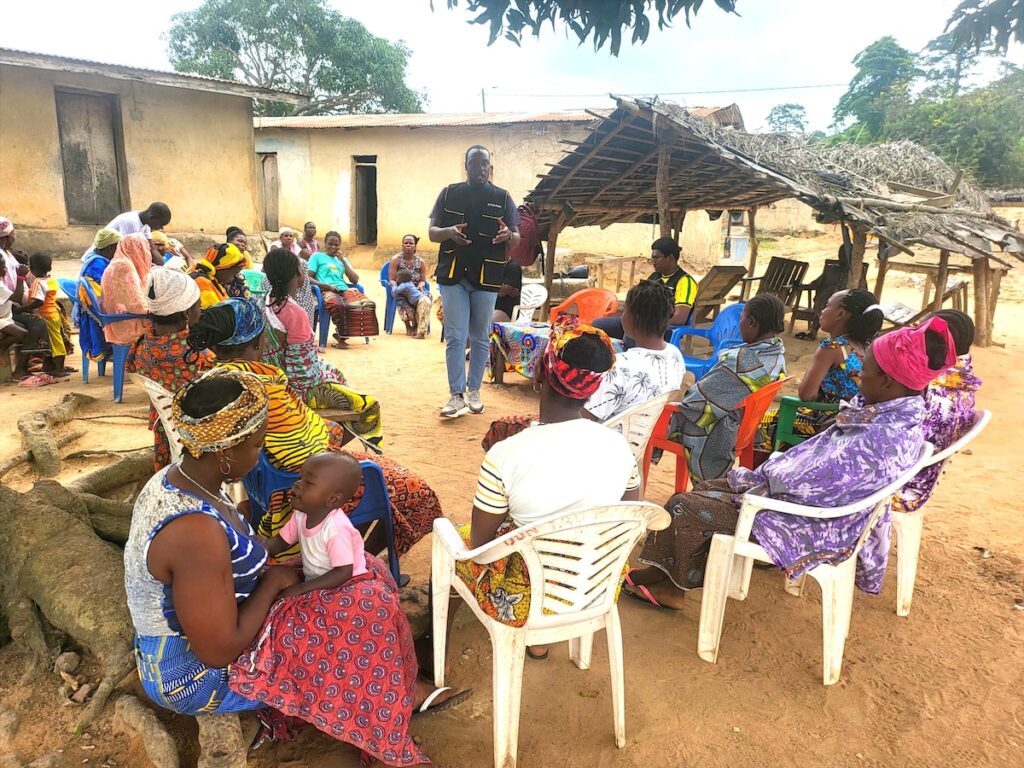
Solidaridad will provide initial support to help the women acquire essential processing materials and encourage them to leverage their AVEC savings groups for collective investments, thereby strengthening their businesses sustainably.
The women will also be supported in deepening their understanding of waste management, to transform by-products into organic fertilizer and protective clothing for safety during processing.
“The training we have received so far has been vital for our business and in improving the quality of our production. Our goal is to improve the extraction rate after the earmarked training and support. We are hopeful that this will help us become self-sufficient.”
Sonia Dembelé
Leveraging savings groups to improve livelihoods
Thanks to previous training and ongoing support from the Association for the Valorization of Community Savings (AVEC), these women now feel better equipped to organize themselves and take control of their future. AVEC has taught them to strategically pool their savings, helping them to invest in equipment, income-generating activities and steadily increase their production and earnings.
According to Louise and Sonia:
“Our deepest aspiration is to become self-sufficient, well-equipped and better trained, so we can sell our products directly, improve our livelihoods and contribute actively to the economic and social development of our communities.”
About Pathways to Prosperity
Funded by the Netherlands Ministry of Foreign Affairs, the Pathways to Prosperity programme (2023-2029) aims to enable 85,000 producers and workers to prosper by transforming local supply chains to be more profitable, inclusive and environmentally friendly. The programme seeks to create decent green jobs, thereby reducing poverty and inequality.