
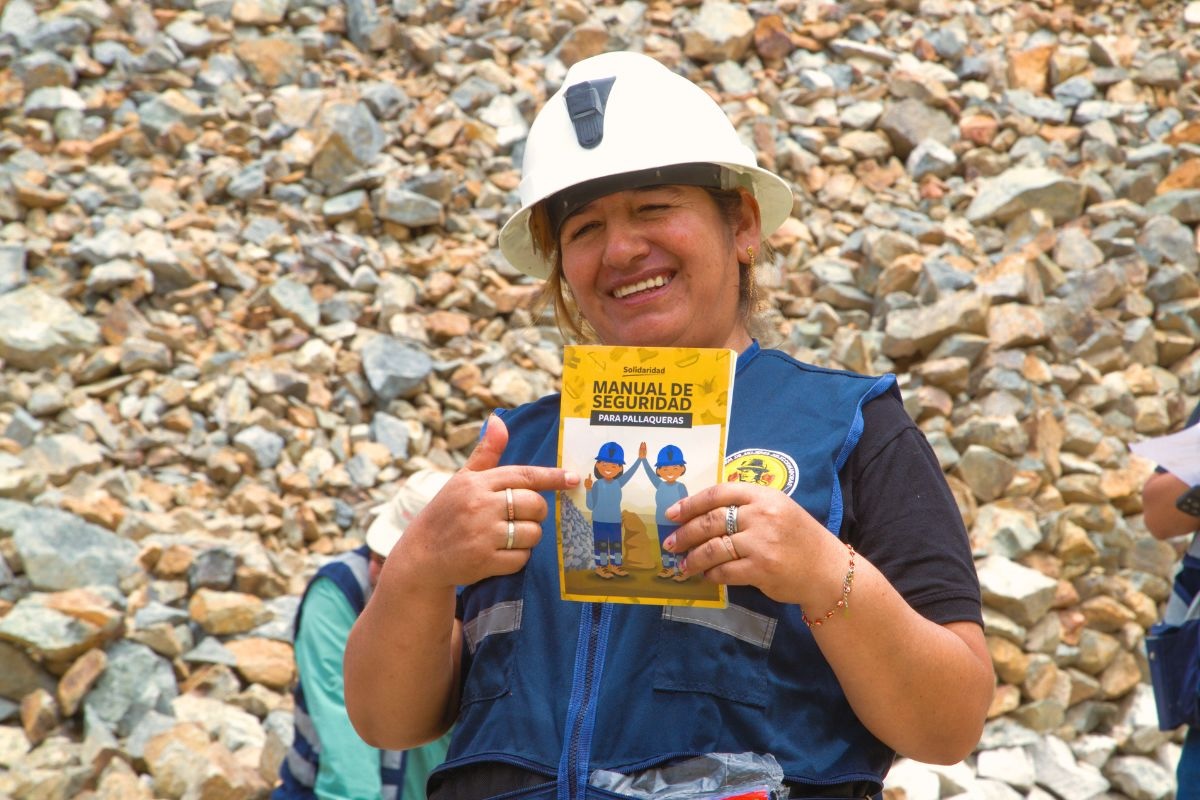
The State of the Artisanal and Small-Scale Mining Sector 2023 (PDF) report by Delve reveals a persistent global challenge: women miners are largely invisible in occupational health and safety systems. Training materials are rarely adapted to their actual roles, and their exposure to dust, chemicals, physical strain and gender-based violence remains poorly addressed. Moreover, institutional responses often fail to consider the structural inequalities and limited civic space that restrict women’s participation and recognition in the sector.
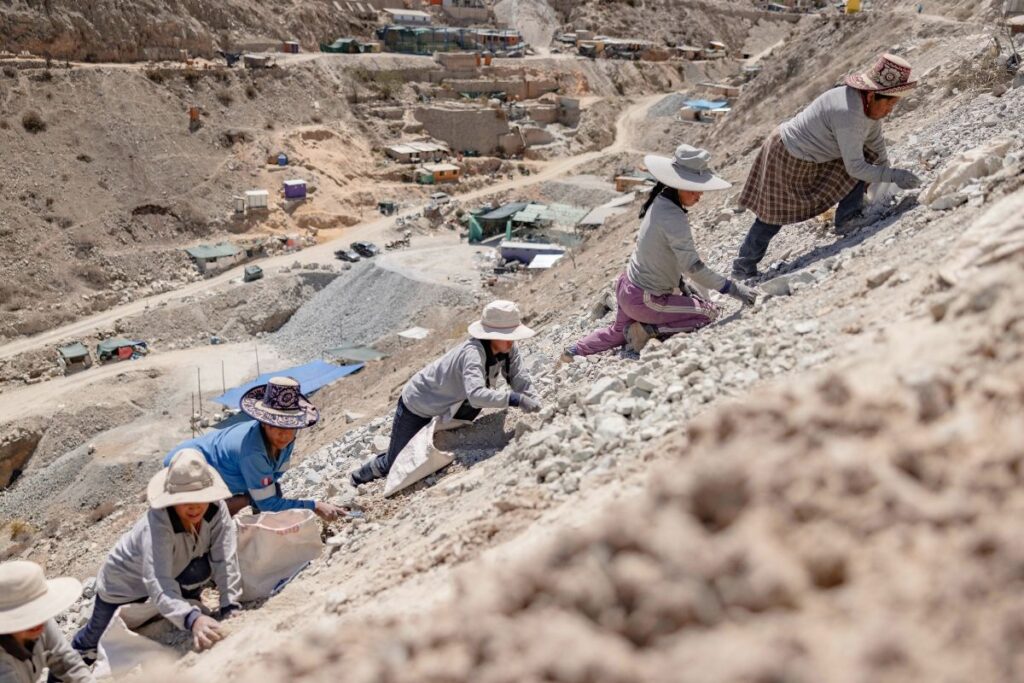
This is clearly reflected in Peru, where pallaqueo—recovery of gold from discarded ore through manual selection—takes place largely in informal conditions within artisanal mining sites. Pallaqueras often work without formal recognition, protective equipment or safe infrastructure, and are excluded from basic labour protections. According to the study Pallaqueras: Entre Piedras y Oro (PDF), although 90% of these women use helmets, most cannot afford or access other essential personal protective equipment (PPE), such as gloves, masks or goggles. ASM operations typically do not assume responsibility for the safety of pallaqueras, leaving them outside the scope of workplace protections.
These women are rightsholders whose skills, labor and resilience are essential to local economies and the broader mineral value chain. But as the Delve 2023 report highlights, recognizing their contribution is only the starting point. Advancing gender equality in ASM requires:
- Inclusive legal frameworks that recognize women’s roles in the sector;
- Training tools co-designed with women, in formats that are visual, practical and locally relevant;
- Targeted strategies to address gender-specific risks in health and safety; and
- Mechanisms to ensure women have a voice in decision-making and a fair share of value.
Responding to these challenges, Solidaridad and RNM-MAPE launched a campaign rooted in grassroots leadership and the lived experiences of pallaqueras. Through participatory field assessments and dialogue with women’s associations in Arequipa and Ayacucho, they developed a practical occupational health and safety guide tailored to the conditions and realities of women working in pallaqueo.
The guide provides clear guidance on:
- The correct use of PPE and safe body movements;
- Navigating unstable work areas safely;
- Incorporating active breaks and safe handling of tools;
- Reducing exposure to common risks such as dust, mercury and prolonged sun;
- Establishing internal safety roles within organizations to encourage collective care and mutual accountability.
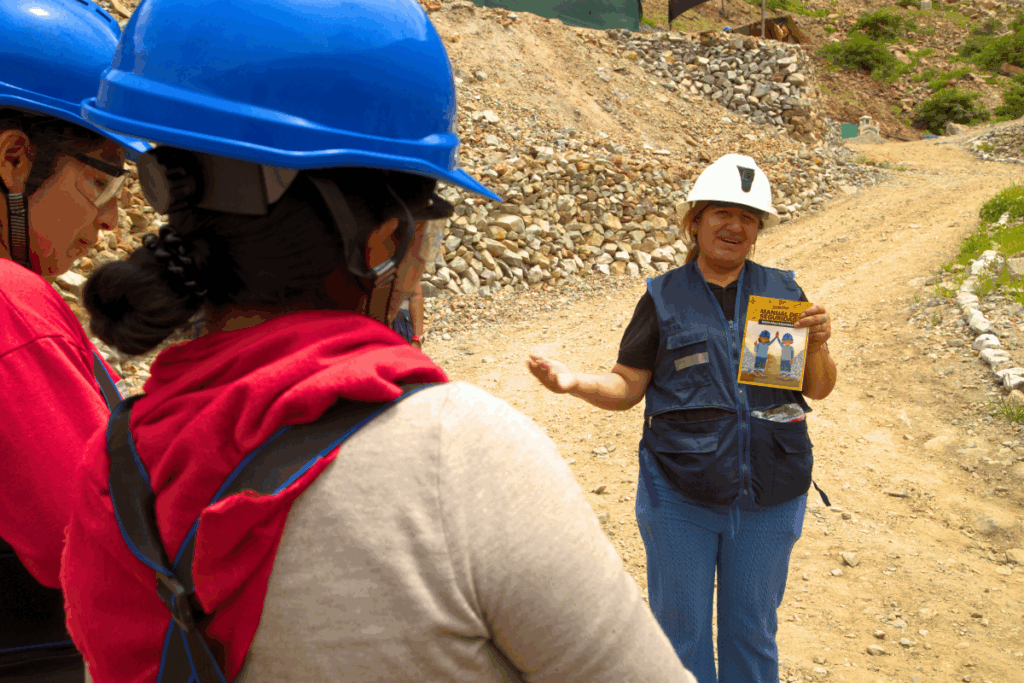
Designed in collaboration with the women who will use it, the guide is delivered in visual, practical and accessible formats, ensuring usefulness and relevance across diverse literacy levels and working environments.
The guide was introduced through peer-led workshops in mining communities, where pallaqueras also received protective gear such as lumbar belts, shin guards and knee pads. These spaces encouraged dialogue, mutual learning and the strengthening of women’s agency to adopt and advocate for safer working conditions—building the foundation for sustained and systemic change.

Digital Communication to Expand Reach and Voice
To amplify the campaign’s impact, RNM-MAPE launched a social media initiative that shared four short videos across Facebook and TikTok. These videos simplified and localized the guide’s key messages, reaching over 100,000 viewers in 17 ASM communities and broadening access to vital health and safety knowledge for pallaqueras across regions.
This digital effort supported collective visibility and voice, creating space for women’s experiences and priorities to be heard beyond their immediate communities.
Towards Inclusive, Equitable Mineral Value Chains
This initiative offers a valuable example of how co-creating knowledge with marginalized actors—particularly informal women workers—can begin to address entrenched inequities. This, in turn, supports more inclusive, gender-responsive and sustainable mineral value chains. While not a systemic solution in itself, it demonstrates how context-sensitive tools and grassroots-led efforts can contribute meaningfully to broader change.
Promoting safety for pallaqueras goes beyond technical fixes. It is also about recognizing rights, increasing visibility and strengthening the role of women within the ASM sector—essential steps toward more equitable and inclusive value chains.
ABOUT RS! AND RNM-MAPE
This initiative was implemented through the global programme Reclaim Sustainability!. It was carried out in close partnership with the National Network of Women in ASM (RNM-MAPE). This collaboration enabled wide-reaching results while centering the leadership of women as agents of change, advancing shared goals of decent work, gender equality, and local ownership in ASM transitions.