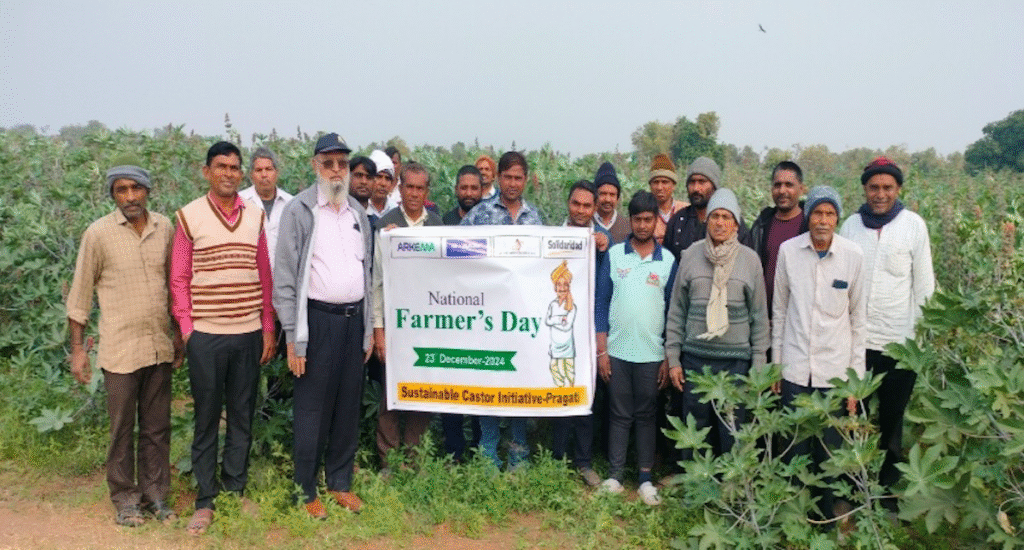
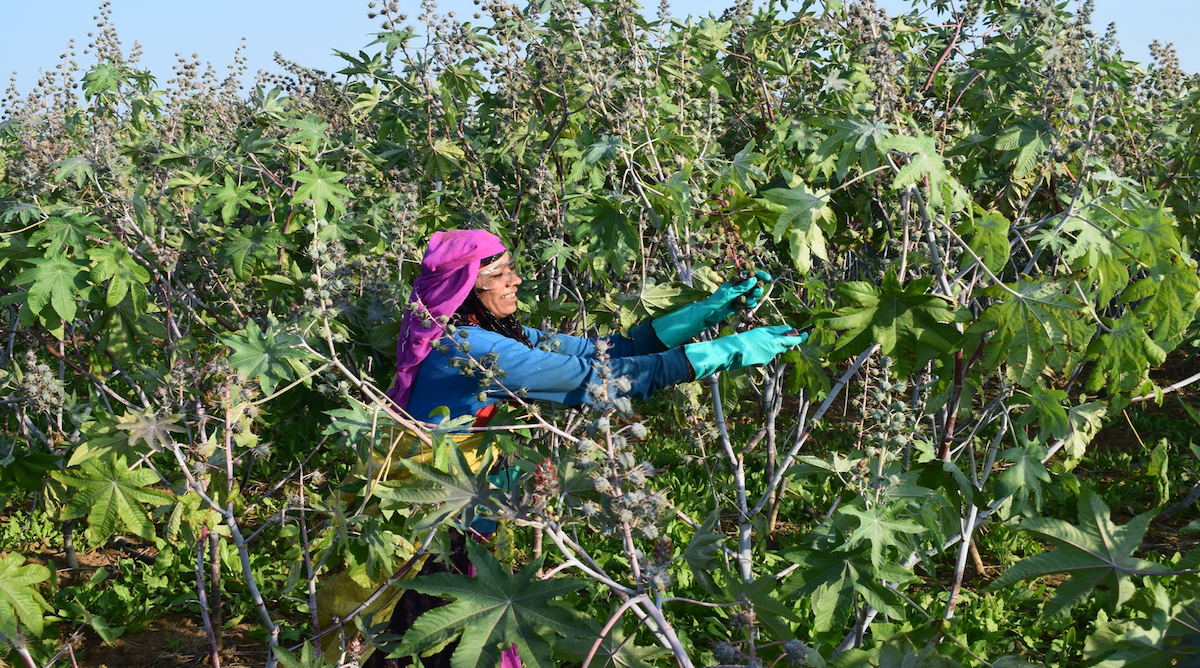
Solidaridad, along with partners Arkema, BASF and Jayant Agro-Organics, launched Pragati in May 2016. Across three phases, the project has laid the foundation for sustainable castor production, promoted good, sustainable cultivation and sourcing practices, and ensured the participation of women in the castor supply chain.
For year nine, the members officially updated the impacts of the programme so far:
- More than 10,000 castor farmers have been trained, audited and certified.
- Over 140,000 tons of certified castor seeds have been cultivated since the beginning of the project.
- Year 9 yields are 32% higher than the government estimates for the entire state.
- Over 12,000 hectares have been farmed in accordance with the SuCCESS code (see www.castorsuccess.org).
- A 30% reduction in on-farm water use was recorded compared to conventional cultivation, through the adoption of efficient irrigation practices.
- More than 10,000 personal protective equipment (PPE) kits have been distributed to castor farmers to promote safe working conditions. All project farmers are now equipped with these kits.
- More than 150 medical camps have been organized in all project villages, benefitting thousands of farmers, farm workers, and their family members.
- This year, more than 450 capacity-building training sessions were held with farmers.
- Over 500 lead farmers have been trained to strengthen peer-to-peer learning.
Strengthening women’s involvement
Women’s participation remains a core pillar of the project. During the 2024-25 season, over 1,150 women farmers were trained, with focused interventions on good agricultural practices and financial planning. These efforts strengthen women’s roles in farm management, financial resilience and community leadership. Through structured training, exposure visits and access to information on government welfare schemes, Pragati continues to support women farmers as active decision-makers within the castor value chain.
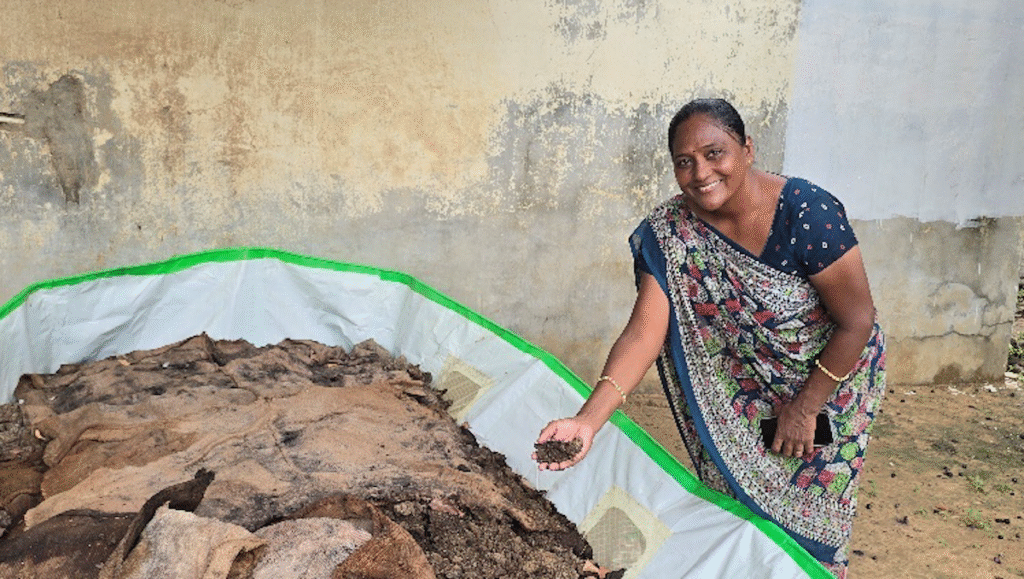
“Farming is my only means to support my family,” says Patel Sharmistha Jagnish Ben, a farmer from Mehsana district, Gujarat. “Through the Pragati programme, I learned sustainable farming practices that improved my soil health and increased my yields, while also reducing my dependence on expensive chemical inputs. The training gave me confidence, not only to manage my farm better but also to make financial decisions for my family. Today, I support my children’s education, and help other women farmers in my village adopt safe and sustainable farming practices. Pragati has truly helped me move towards self-reliance and progress.”
The Programme’s Starting Point
The project was driven by a 2016 baseline survey of more than 1,000 castor farmers in Gujarat, India, where most of the world’s castor supply originates. The study found that farmers view castor as a highly remunerative and profitable crop—easy to grow, and easy to sell.
The goal of the project has been to enable sustainable castor crop production by:
• Using good agricultural practices to increase yield and farmer income
• Efficiently using water resources and maintaining soil fertility
• Driving adoption of good waste management practices
• Enabling better health and safety practices and respecting human rights
According to the impact study commissioned by the Sustainable Castor Association (custodian of the SuCCESS code) and conducted by ThinkThrough Consulting in 2023, the reduced costs and higher yields led to a 30% higher income from castor for certified farmers compared to the non-certified farmers in the same area. As it enters its tenth year, Pragati continues to prove that sustainable castor production is not only possible, but scalable and beneficial for farmers.