
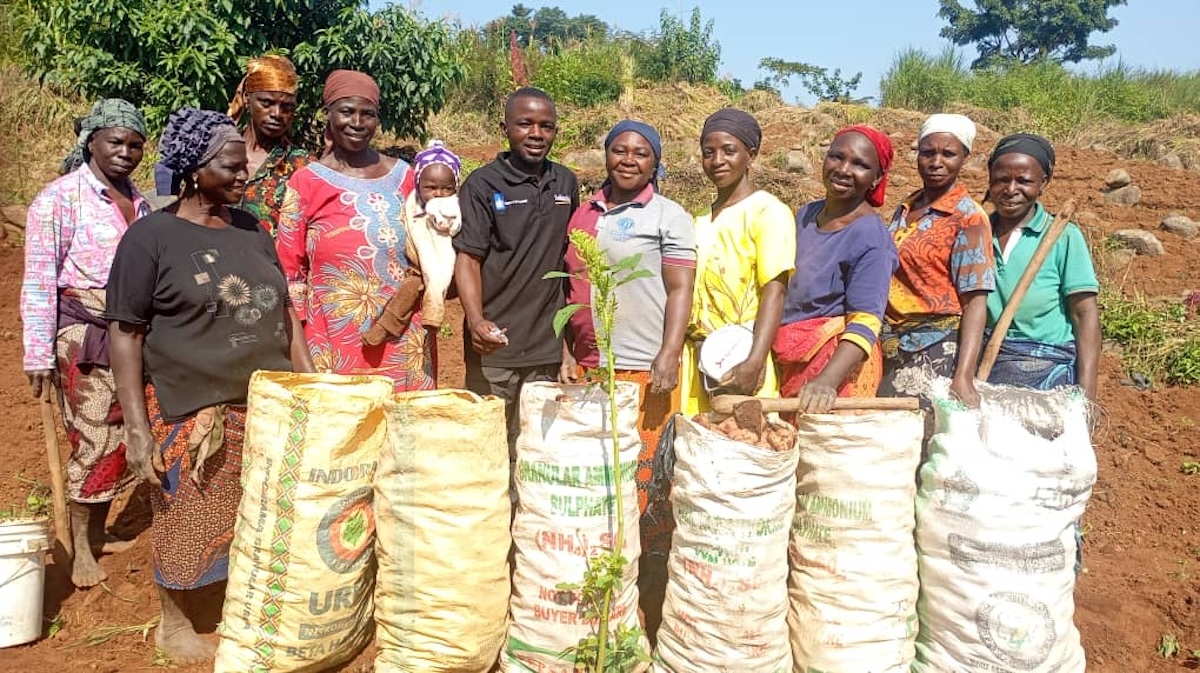
Caleb Sati has spent 40 years of his life cultivating potatoes in the Plateau State of Nigeria. Growing up in a community where potato farming is the primary occupation, it was only natural that Caleb followed the path laid before him.
“We farm potatoes all year round — during the rainy season and in the dry months through irrigation,” he shares.
Caleb’s day begins before sunrise, when he walks two kilometres to his farm. There, he works on his fields, checks soil moisture, removes weeds and examines the leaves for signs of pests or disease. During planting seasons, he spends long hours preparing ridges, selecting seed potatoes that he deems healthy and coordinating the work with his wife.
Irrigation days during the dry seasons are even busier, as he must maintain the pumps and ensure his farm receives sufficient water. By afternoon, Caleb is back at his home to attend to other needs. His routine is steady, disciplined and deeply committed to the land he has known all his life.
From struggling harvests to a new path forward
Despite Caleb’s dedication, his harvests were disappointing. His crops were often attacked by late blight and other diseases, leaving him with shrivelled tubers and poor yields.
“Due to frequent attacks of pests and diseases, I spent heavily on pesticides to mitigate the situation. My earnings barely covered the costs,” he explains.
Amidst these challenges, a new opportunity emerged in 2023 when farmers in his community began to receive training in sustainable agricultural practices. As part of the Acting Now project, the training focused primarily on preventing pests and diseases.
To support hands-on learning, a demonstration farm was established where farmers, together with the trainers, planted disease-resistant varieties of potato seed. This demonstration farm helped farmers acquire skills in sorting seedlings, proper spacing, application of manure, timely heaping and other good practices. Months after planting, the improved potato seed varieties from the demonstration plots were then distributed to participating farmers.
Improved varieties deliver record yields
Caleb received just 29 tubers from the demo farm. But, determined to make the most of this opportunity, he applied the new knowledge he had gained. He planted the 29 tubers, and within three months, he got 25 kilograms of seed, which he later expanded to 200 kilograms. With this, Caleb was well-prepared for the next farming season.
In 2024, Caleb conducted his own experiment by planting his old potato variety on one plot and the improved variety on another. While the old variety succumbed to blight halfway into the season, the improved variety thrived until harvest. Encouraged by the results, Caleb has since expanded the improved variety across his three-hectare farm.
“In this farming season, I harvested 500 kilograms of potatoes with an income of 400,000 Naira (238 euros). This is the highest I have ever harvested in my decades of farming. In the previous season, I only harvested 150 kilograms from the same plot because disease wiped out most of my crop,” says Caleb with pride.
Sharing seeds and spreading knowledge
Today, he not only produces more potatoes for sale, but also supplies surplus hybrid seeds to other farmers in his community, creating an additional stream of income.
Ogochukwu Akunna, the Acting Project Coordinator of the Acting Now project at Solidaridad in Nigeria, explains that the initiative has played a crucial role in strengthening local food systems over the past two years.
“By supporting farmers to adopt more resilient production practices, we are ensuring that communities are better prepared for future climate shocks and economic uncertainties.”
Ogochukwu Akunna, Acting Project Coordinator of Acting Now project at Solidaridad Nigeria
Funded by the Netherlands Ministry of Foreign Affairs, the Acting Now project is empowering farmers like Caleb to build a brighter future for themselves, their families, and their communities. Through the project, thousands of farmers across Nigeria are gaining vital support in Jigawa, Kaduna, Kano, Plateau and Ogun states.