
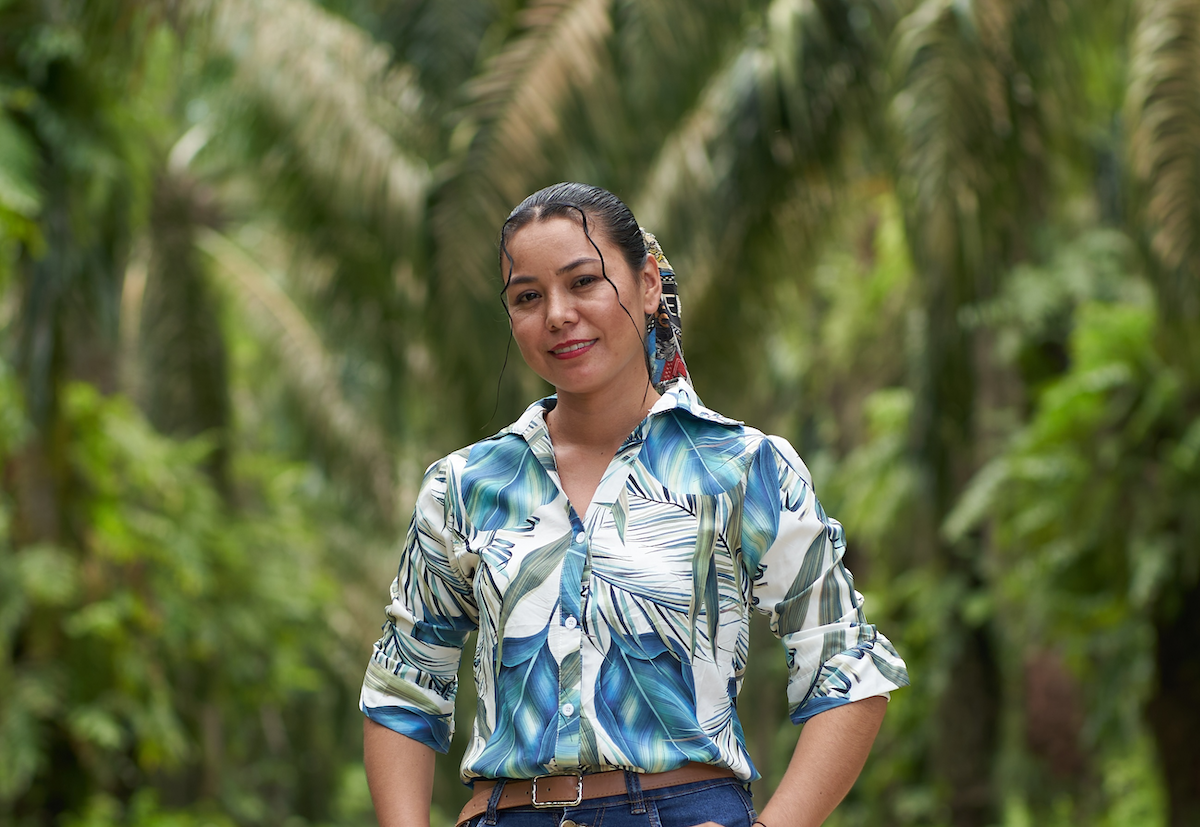
“Developing the capacity among producers is the best strategy to ensure that, in the long term, they can comply with our sustainability policies,” says José Alejandro Moreno Peralta, Cargill’s sustainability coordinator in Colombia.
Solidaridad’s connection with small and medium-sized producers of fresh fruit bunches complements the close relationship Cargill has with commercial palm oil extractors, and contributes to the company’s ability to foster sustainability deeper in the supply chain.
“For Cargill, it has always been important to work with partners who understand the local context and can work directly with our producers. Solidaridad also provides us with that knowledge and experience to work with them on sustainability issues,”
“For Cargill, it has always been important to work with partners who understand the local context and can work directly with our producers. Solidaridad also provides us with that knowledge and experience to work with them on sustainability issues.”
José Alejandro Moreno Peralta, Cargill’s sustainability coordinator in Colombia
The partnership between Cargill and Solidaridad promotes the inclusion of best practices with a data-driven strategy focused on two outcome areas: improving farmers’ livelihoods and climate-friendly agriculture. The programme has a goal of training 880 palm growers to improve their Sustainability Indices (IDS), including 520 oil palm producers from Cargill’s value chain by the end of 2026. Additionally, the partnership is working with 100 producers to establish carbon footprint baselines in their plantations to better understand the scale and scope of carbon emissions in the sector.
“We have two components in the joint project with Cargill: one related to livelihoods, where we support IDS measurement and training strategies, and another related to climate, where we have the specific task of measuring the carbon footprint at the plantation level,” explains María Goretti Esquivel, manager of Solidaridad’s Oil Palm program in Colombia.
Work aligned with producers and the environment
The work of the alliance aligns Cargill’s objectives with the sector agenda established by the National Federation of Oil Palm Growers (Fedepalma) and Solidaridad. The strategic sustainability pillars include human rights, labor rights, watersheds, and climate change.
“Our organization’s mission and vision is to feed the world in a sustainable way. We have an ambitious goal of reducing greenhouse gas emissions by 30% across the entire chain,” says Moreno Peralta.
In the field, a network of Solidaridad trainers use Agrolearning, an educational platform with various tools to encourage producers to learn, validate, and update information on production, sustainability, and the certification process. The carbon footprint estimate is based on data gathered with the Ecopalma App, an emissions calculator developed by Cenipalma, a palm oil research center in Colombia.
“Our contribution to this monitoring is built on digital tools and our connection with producers, which helps us gather key information and demonstrate the impact of interventions and the progress producers are making,” says Goretti.
Sowing seeds of sustainability in Colombia
“Thanks to Solidaridad and Cargill, we can sleep soundly at night because I know we are doing things right,” says José Luis Bolívar, a palm grower from Puerto Wilches in the department of Santander.
“I am very happy with the intervention of Solidaridad and Cargill, which have provided us with significant support, so much so that I have now formalized my entire work team. In addition, we have also been able to be very environmentally friendly,” he adds.
“The mill, Solidaridad, and Cargill have supported us with supplies and training for workers, to be better producers, to help the environment.”
Reinaldo Marín, owner of the Villa Luz farm in Barrancabermeja
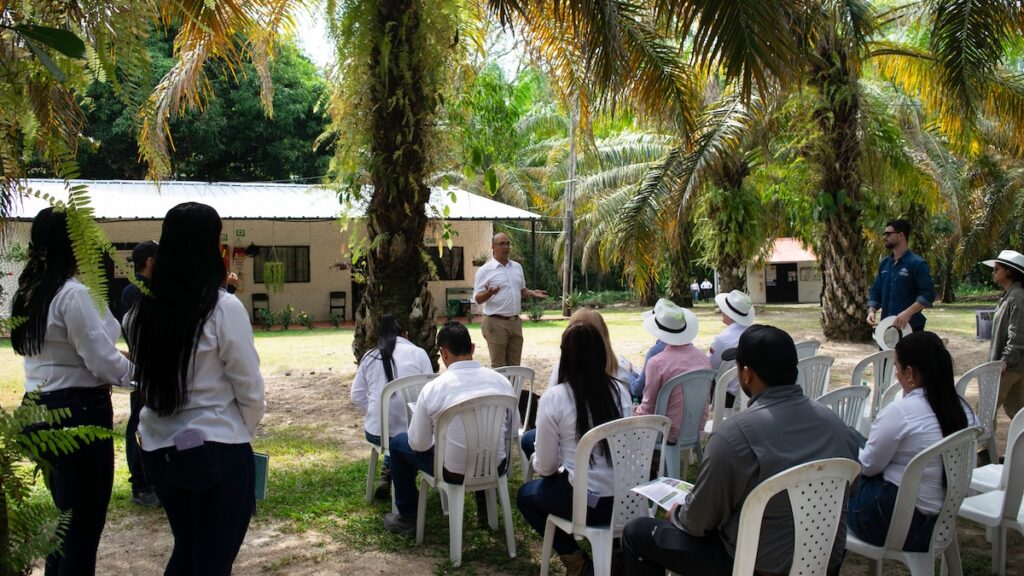
Reinaldo Marín, owner of the Villa Luz farm in Barrancabermeja, values the training work to improve the conditions of his crop. “The mill, Solidaridad, and Cargill have supported us with supplies and training for workers, to be better producers, to help the environment,” he says.
The training strategy for producers in palm-growing areas focuses on high conservation value areas, proper use of agrochemicals, waste management, labor formalization, and health and safety.
The training helps producers advance on certification processes, like the Colombian Sustainable Palm Oil (APSCo) programme. The work is not only geared toward market requirements on carbon issues, which increasingly value efforts to reduce emissions in production, but also toward new European Union regulations, which anticipate changes in the current market.
“These new regulations require us to ensure that these producers comply with all labor regulations and do not cause deforestation,” notes Moreno Peralta. “Only through these projects can we close the gaps and mitigate the risk of non-compliance with these requirements.”
