
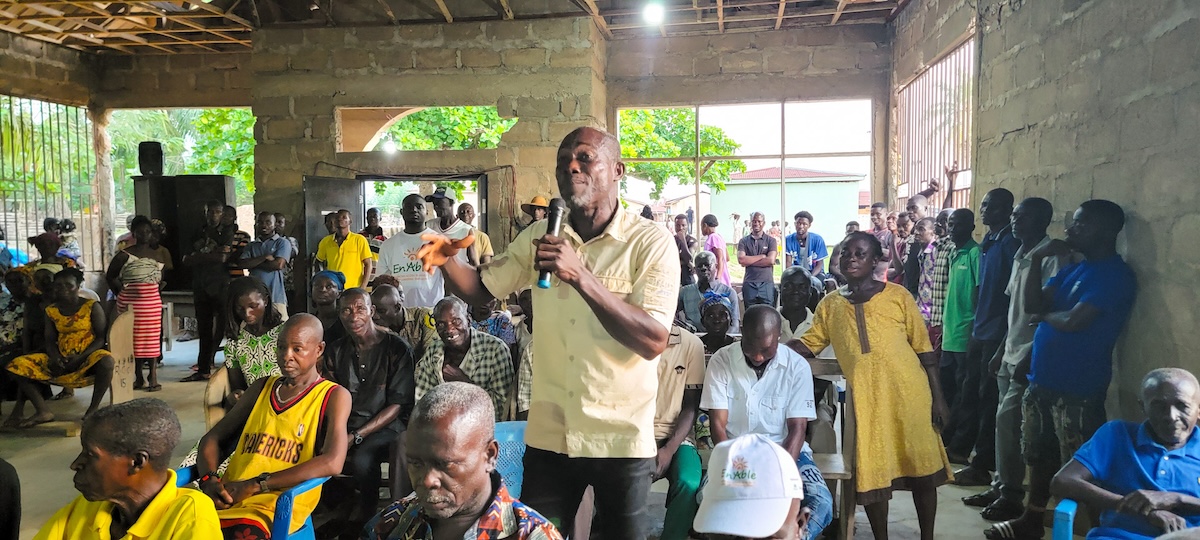
The mission confirmed strong progress toward more inclusive decision-making and improved community-level understanding of emission-reduction incentives. It also highlighted growing readiness among women’s groups and other vulnerable actors to participate in benefit-sharing mechanisms under the Ghana Cocoa Forest REDD+ Programme.
Solidaridad and Tropenbos Ghana are implementing this project, in partnership with national and local institutions. It operates across six hotspot intervention areas (HIAs), strengthening local systems that link forest protection with equitable access to climate and development benefits.
From exclusion to participation in climate decision-making
A defining feature of the EnABLE Project is its deliberate focus on groups often left out of climate governance processes: women, youth, migrants and persons with disabilities. The World Bank mission observes that these groups are increasingly becoming active contributors to local governance, benefit-sharing, and conservation efforts.
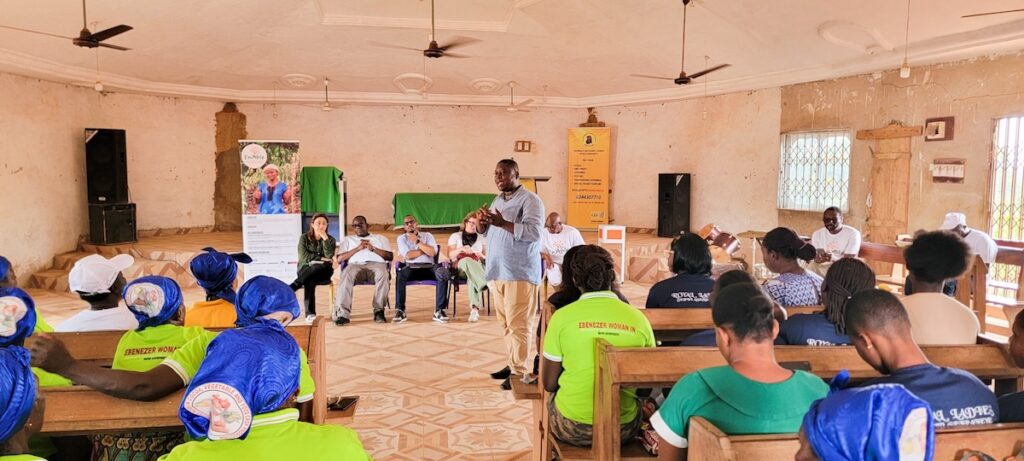
“Our visit showed that women, youth, migrants and persons with disabilities are not just participants but active contributors. Their readiness to engage in benefit sharing and governance is a powerful signal that inclusive climate action is possible at the community level.” — Mr. Patrick Ansah, World Bank Mission.
Following technical engagements in Accra, the mission visited selected project communities in Ghana’s Western North region in November 2025 to assess progress. Discussions focused on benefit sharing, local governance and the inclusion of vulnerable groups in decision-making processes.
Clear community understanding of conservation and benefits
Across project sites, communities demonstrated a clear understanding that access to carbon and development benefits is directly linked to forest protection, tree planting and sustainable land-use practices. Community members acknowledged that conservation efforts have already translated into shared benefits, strengthening confidence in the REDD+ Benefit Sharing Plan and reinforcing commitment to continued forest stewardship.
“We know it is because of the trees we planted and the forest we protected that the benefits came to us. Without our care for the land, there would be nothing to share.” — Sylvester Mensah, Sefwi-Bibiani HIA Management Board Chairperson.
Women’s cooperatives shaping livelihood support
Engagements with women-led cooperatives showed strong internal governance, collective accountability and effective leadership. Women actively shaped the project direction by providing practical input into the design of livelihood support, particularly on the advantages of revolving funds and grants. Their contributions are helping to shape implementation decisions that reflect beneficiary priorities and support sustainable livelihoods.
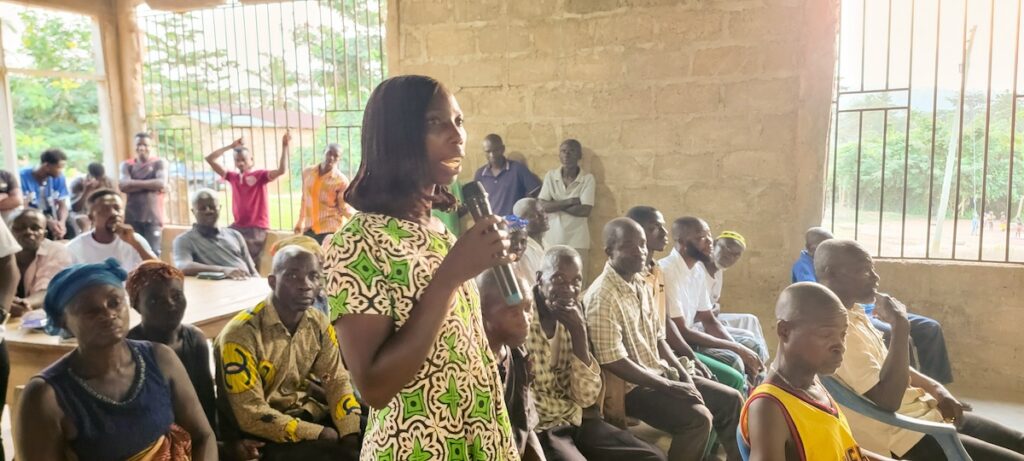
“Through our cooperative, we have learnt to manage funds together and support each other’s farms. The revolving fund gives us dignity because we decide how to use it, and it helps us grow beyond subsistence.” — Veronica Arthur, President, Ebenezer Women’s Cooperative, Sefwi-Asempaneye
Functional local governance through HIA structures
The mission also observed that the HIA management boards serve as an effective platform for coordination among communities, traditional authorities and relevant state institutions, supporting collective decision-making on forest protection and benefit distribution. Women’s participation in governance levels was particularly notable, with increasing representation in leadership positions and technical discussions. This shift is contributing to inclusivity, greater transparency and accountability in local decision-making processes.
Inclusion of persons living with disabilities
Beyond gender inclusion, the project is also enhancing the equal participation of persons living with disabilities. The group has demonstrated a strong interest in contributing to the project activities, including awareness creation and livelihood initiatives.
“Inclusive forest governance is stronger when all members of society are fully involved. With training and inclusion, we can contribute just like anyone else.” — Isaac Nkuah, President, (PWDs Association Western North)
Looking ahead
According to Alfred Fosu, EnABLE Project Manager, the World Bank mission marked an important milestone for the project’s next phase.
“The mission provided valuable technical guidance and constructive feedback across implementation, safeguards, monitoring, and fiduciary areas, which has further strengthened our delivery approach. We are particularly encouraged by the collaborative engagement with the World Bank team, both at the national level and during field visits, which has reinforced our shared commitment to achieving inclusive, climate-resilient outcomes for beneficiary communities. The insights gained from this mission will directly inform our work planning and accelerate effective implementation moving forward.”
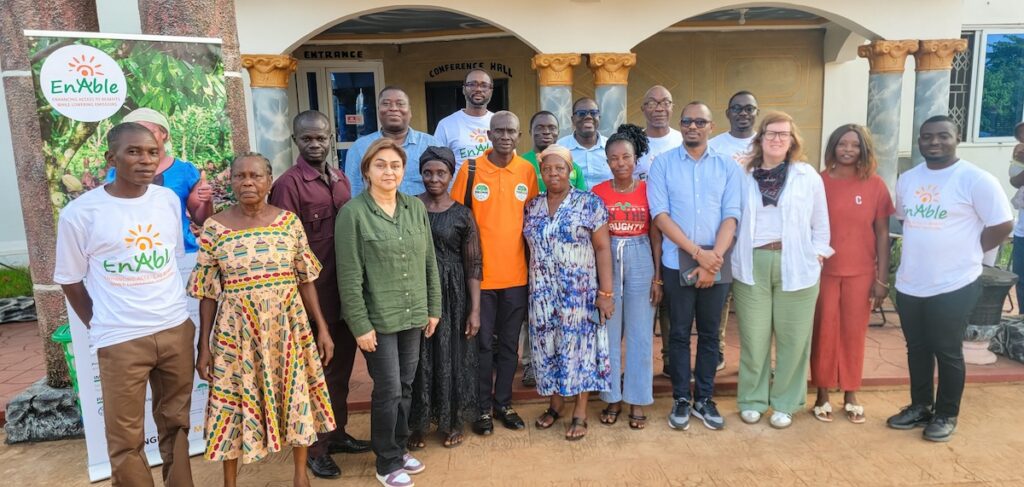
The four-year initiative (2024–2027), funded by the World Bank, aims to promote inclusive governance and equitable access to carbon and non-carbon benefits under the Ghana Cocoa Forest REDD+ Programme, focusing on women, youth, migrants and persons with disabilities. The project seeks to reach 20,000 cocoa farmers in 100 communities to strengthen local systems for benefit sharing, sustainable land use and participation in results-based climate finance.